If you plan to scale sales on Kaspi.kz or in offline retail in Kazakhstan, wholesale purchases from China remain the main source of margin when implemented correctly. Below is a practical 2026 manual: advantages, products, supplier search, logistics and concrete tools to minimize risks. The material is written from a practical perspective — with calculations, checklists and examples that you can apply right away.
1. Advantages of wholesale importing from China
Briefly about the numbers and facts important for making a decision:
- Prices and assortment. According to practitioners in 2026, the average purchase price for mass-market goods (clothing, costume jewellery, accessories) in China is 10–30% lower compared to alternatives from other countries at the same quality. This allows operating with margins of 20–50% after all expenses.
- Speed of scaling. Chinese suppliers are ready for large MOQs and fast order processing — crucial for expanding assortment and launching new test SKUs. For sellers on Kaspi Магазине this is critical when preparing for sales events (for example, Kaspi Жума — see the article Kaspi Жума).
- Variety of sourcing channels. From wholesale marketplaces (1688, Alibaba) to factories and fairs (Yiwu, Canton Fair) — you can choose a model that fits your budget and risk appetite.
- Logistics schemes. Starting with DBS/FBS/FBO models, the seller can combine delivery to Kazakhstan and local finishing of packaging for marketplace sales. Links to fulfillment options: FBS and FBO Kaspi.
Important: if you target premium segments, wholesale from the US or Europe can sometimes be more justified — we discuss this alternative in the section “When to choose wholesale from the USA”.
2. Which product categories to buy wholesale (and why)
The category choice affects logistics, customs, returns and turnover times. Below is a practical classification with examples of margins and risks for Kazakhstan in 2026.
2.1 Clothing and textiles (оптом одежда из китая)
- Advantages: low unit cost, high purchase frequency, fast stock turnover.
- Disadvantages: returns due to size mismatches, need for a sizing chart and exchanges.
- Example: wholesale price of a T‑shirt 3.5–5 USD, average retail price on Kaspi — 3,000–6,000 KZT (depending on segment). After all costs, a 25–45% margin is realistic with proper return management.
- Tips: use template size charts, include clear measurement guides and photos, and define an exchange policy to reduce size-related returns.
... (the rest of the article continues with detailed sections on electronics, household goods, children’s products, motorized items, logistics schemes, customs clearance steps for Kazakhstan, paperwork, incoterms and insurance, quality control methods including QC agents and pre-shipment inspections, examples of calculations for landed cost, recommended checklists before first shipments, automation tools for repricing and inventory, practical cases for Kaspi sellers, and final category-specific recommendations and templates.)
, size photos and A/B‑testing of product cards (A/B testing of product cards).2.2 Children’s clothing (wholesale children’s clothing from China)
- Pros: steady demand, high turnover in smaller sizes.
- Risks: stricter requirements for chemicals and labeling, possible returns due to defects. Certificates and compliance with safety standards are required.
- Margin: usually higher than adult clothing if you ensure good packaging and an accurate size chart.
2.3 Costume jewelry and accessories (wholesale costume jewelry from China)
- Pros: low cost, light weight — savings on shipping.
- Cons: high competition, frequent returns with low quality. Balance price and quality to avoid a wave of returns.
- Tip: collect reviews and product rating metrics on the platform (review analytics), use rich content and high‑quality photos (Rich content).
2.4 Bicycles and large items (wholesale bicycles from China)
- Pros: high average order value, large absolute margin.
- Cons: complex logistics and assembly, warranty obligations, risk of damage during delivery. Local assembly/service is often required.
- Practice: importing 100 bicycles in a container (FOB) reduces unit cost by 20–30% versus air freight, but adds 30–50 days to lead time.
2.5 Electronics and small appliances
- Risks: certification, warranty obligations, returns. Samples must be checked for compliance and tested.
- Tip: work with proven factories and perform pre‑production quality control before shipment.
2.6 When to consider wholesale from the USA
Wholesale purchases from the USA make sense for premium and niche assortments, branded goods, and frequent small batches with fast delivery (air freight). For mass goods by price/quality, China remains competitive.
3. How to find reliable suppliers — step by step
The algorithm I use when launching a new product line in Kazakhstan:
- Define technical and price requirements. Specify materials, production lead times, MOQ, target profitability. This is your technical brief for negotiations.
- Search on platforms and offline. Start with 1688 and Alibaba; for mass goods 1688 often gives better prices but requires an agent or a Chinese account. Visit Yiwu and Canton Fair to get direct contacts. See the practical buying guide: How to buy in China: step‑by‑step.
- Shortlist 5–7 candidates. Request price lists, MOQ, production time, photos and certificates. Compare by metrics: unit price, lead time, MOQ, branding options.
- Supplier verification. Request: a copy of the business license, factory address, references to real shipments, contact references. Use paid audits for large orders.
- Order samples. A sample is mandatory. For clothing, require single samples in sizes; for electronics — pre‑production samples with tests.
- Contract and payment terms. For first orders use 30% prepayment, 70% on shipment (T/T) or a letter of credit for large sums. Escrow and Alibaba Trade Assurance reduce first‑deal risks.
- Quality control before shipment. Hire a QC agent in China (photo report, video, factory inspection). This reduces defect rates and saves money on large batches.
Practical tip: if you plan to sell on mass marketplaces in Kazakhstan, prepare SKUs and product card structure in advance — this speeds up catalog upload. More on product cards: product card on the marketplace.
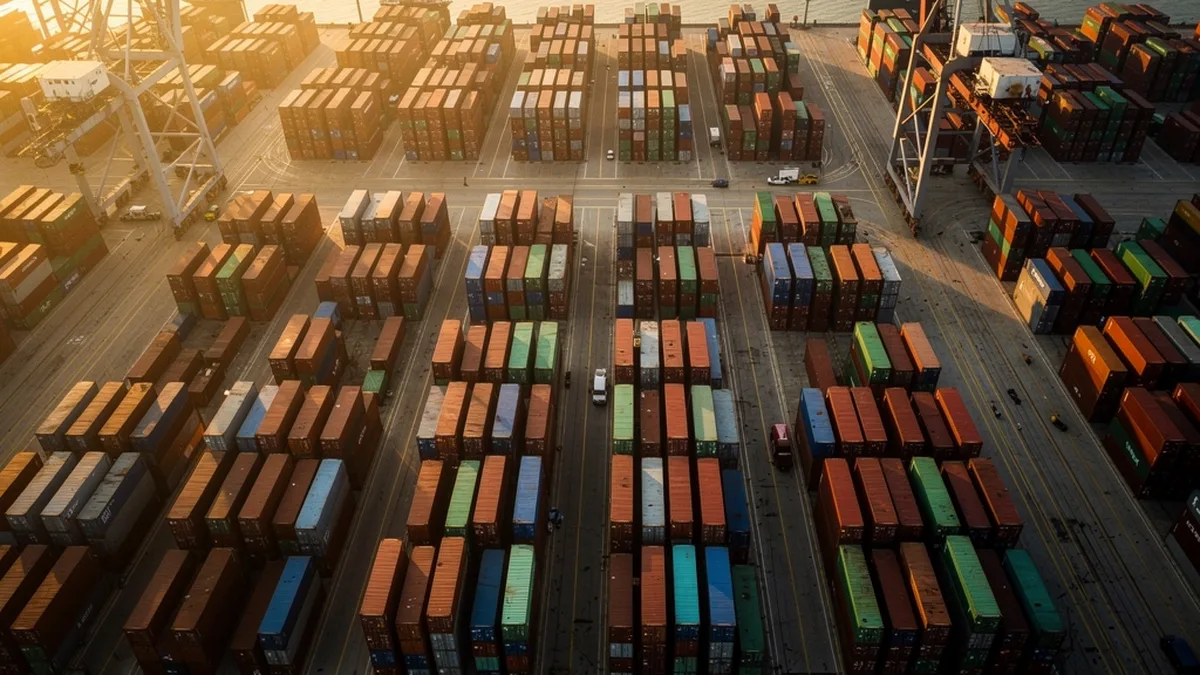
4. Customs rules and logistics: step by step for Kazakhstan
Logistics and customs are key points in the import chain. Below is a simplified step‑by‑step model with real numbers to calculate landed cost.
4.1 Full landed cost calculation model (landed cost)
Basic formula:
Unit cost = FOB or EXW price + shipping (container/air) + insurance + customs duties + VAT + domestic transport/fulfillment + marketplace commission + packaging and labeling
Example calculation for a sample product (in USD):
- FOB manufacturer price: 3.50 USD
- Sea freight (container, including customs clearance and last mile for a batch of 1,000 pcs): 0.60 USD/pc
- Insurance and documents: 0.05 USD/pc
- Customs duty (assume 5%): 0.18 USD/pc
- Kazakhstan VAT (12%): calculated on (cost + duty + logistics), roughly 0.52 USD/pc
- Domestic fulfillment and packaging: 0.30 USD/pc
- Marketplace commission (Kaspi): ~10% of retail — assume retail price 10 USD, commission 1.0 USD/pc
Total unit cost ~6.15 USD, margin at a sale price of 10 USD — 38.5% before operating expenses. This is a demo calculation; plug in real rates and exchange rates.
4.2 Choosing a shipping method
- Sea container shipping (LCL/FCL). Cheapest per unit for mass goods, but lead times 25–50 days from factory to Kazakhstan.
- Air freight. Fast (3–10 days) but expensive. Suitable for samples, premium batches and replenishing urgent stock.
- Express (DHL/UPS/FedEx). For small expensive batches and urgent orders.
- Combined schemes. Sea to a hub port + truck delivery across the EAEU with customs declaration in Kazakhstan.
Practical choice depends on turnover: for items with turnover under 30 days air can be justified; for 60–120 day cycles — by sea.
4.3 Customs clearance and documents
- Invoice, packing list, bill of lading/AWB, certificates of origin (if you want preferential rates), commercial invoices.
- HS codes: declare the correct code to get the right duty rate. A wrong code usually leads to extra costs and delays.
- Certification and labeling: children’s goods and electronics require specific certificates and declarations of conformity.
- Recommendation: use a specialized customs broker in Kazakhstan and prepare the document package in advance — this saves 3–10 working days.
For details on customs clearance read: Customs clearance and the practical guide How to clear cargo in Kazakhstan.
5. Marketplace and operations in Kazakhstan: preparing to sell on Kaspi.kz
After import the task is to correctly list the product on Kaspi and manage its lifecycle.
- SKU and catalog upload. Assign a unique SKU/article and prepare a price list. See common errors when creating a price list in the article Price list for Kaspi.
- Product card. 1) Titles with keywords, 2) 4–6 photos, 3) size charts, 4) specifications. Eliminate 7 typical product card mistakes so ads don’t eat the budget — see 7 product card mistakes.
- Advertising and promos. Optimize ad spend by ROI; for testing use 1–3 SKUs and target CTR and conversion. For repeat sales use triggered mailings — AWW can automate repricing and analytics for sellers.
6. Risks and how to minimize them
Below is a list of risks I’ve encountered personally, and practical ways to reduce them.
6.1 Product quality and claims
- Problem: mass returns due to defects or mismatch with buyer expectations.
- Measures: provide quality control before shipment, perform random checks on 5–10% of the batch, keep a returns reserve in the budget (typically 2–8% for clothing and accessories).
- Example: ordering 5,000 T‑shirts with 3% defects = 150 pcs. QC and fixes at the factory usually cost less than handling returns and getting bad reviews on Kaspi.
6.2 Missed deadlines and logistics delays
- Causes: factory delays, port queues, seasonal peaks. In 2024–2026 seasonal fluctuations were observed due to increased container demand in peak months.
- How to reduce: hold safety stock of 20–40% of average consumption for 30–45 days, use combined logistics (partial air for critical SKUs).
- Practice: automate inventory forecasting — Stock forecasting and integration with sales analytics speeds decisions.
6.3 Financial risks and currency fluctuations
- Risk: tenge devaluation increases local unit costs. FX hedging and contracts in local currency with suppliers are usually not possible.
- Methods: stagger payments, keep small dollar reserves, or negotiate partial payment after shipment. For large orders consider banking instruments (letter of credit).
6.4 Legal and certification risks
- Children’s goods and electronics are regulated by state authorities. Check requirements and certificates for the category in advance.
- Tax and accounting: import according to EAEU and Kazakhstan rules, use a tax consultant — mistakes lead to fines and cargo returns.

7. Practical cases and end‑to‑end examples
Three concise cases you can replicate:
Case A: Clothing (mass segment) — 1,000 T‑shirts
- FOB purchase price: 3.50 USD
- Sea freight LCL: 0.60 USD/pc
- Customs + VAT + internal costs: 0.80 USD/pc
- Total cost: 4.90 USD
- Retail on Kaspi: 11,000 KZT (~24 USD at a 2026 example conversion)
- Expected margin after fees and returns: 30–40%.
Conclusion: with the right product card and ad campaign you can be profitable from the first batch. Read about product selection and store launch: How to find profitable products and How to open a store on Kaspi.
Case B: Costume jewelry — 5,000 pcs
- Low weight = low logistics costs. Factory price 0.50–1.20 USD/pc.
- Quality control + professional photography increase product card conversion by 15–30%.
- Important: packaging and protection against damage in transit.
Case C: Bicycles — 200 pcs in a container
- FOB price: 75–120 USD/pc; sea freight and customs significantly reduce unit price.
- Agreement on assembly and warranty in Kazakhstan is required; a service partner increases buyer trust and reduces returns.
8. Metrics control and automation
Which KPIs to track daily/weekly:
- Days of stock (DOS) and turnover — controlled via inventory forecasting (stock forecasting).
- CTR and conversion of product cards — test titles and photos; use the SEO‑optimizer for cards.
- Customer acquisition cost (CAC) and ROI of campaigns — track at SKU level.
- Competitor price monitoring: automatic repricers reduce the risk of a price war — see Repricer and Price monitoring.
Tools: AWW — as an automation tool — helps with repricing, sales analytics and demand forecasting.

9. Checklist before the first shipment
- Product brief and target margin indicators.
- List of 5 suppliers, samples from 2–3.
- Agreed packaging and labeling for Kaspi.
- Contract and payment terms; prepayment or guarantee.
- QC before shipment, cargo insurance.
- Customs clearance plan and contact of a broker in Kazakhstan.
- SKUs, product cards and ad campaign ready to launch.
10. Final recommendations by category
- If you’re starting with a limited budget — start with costume jewelry and accessories (low entry cost and quick turnover).
- For steady growth choose clothing and children’s clothing: high purchase frequency and the ability to increase AOV through cross‑sell and bundling.
- Bicycles and large appliances are a growth point for those ready to invest in service and logistics.
- Wholesale purchases from the USA make sense for branded and premium goods; for the mass segment China remains the main option for price/assortment.
Useful materials and links in the article:
- Customs clearance
- FBS
- Stock forecasting
- Price monitoring
- Repricer
- How to choose and order goods from China
- How to open a store on Kaspi
- Sales strategies for Kaspi Жума
Часто задаваемые вопросы
- How can I reduce risks when ordering wholesale from China for the first time?
- Start with a small test: 1) order samples; 2) work through a trading platform with payment protection; 3) use a QC agent before shipment; 4) stipulate defect returns in the contract.
- What documents are needed to clear clothing through customs in Kazakhstan in 2026?
- Standard package: commercial invoice, packing list, bill of lading/AWB, certificate of origin if required, and conformity certificates for children’s clothing and textiles when special requirements apply.
- How do I calculate the selling price of a product sourced wholesale from China including all costs?
- Use the formula: purchase (FOB/EXW) + shipping + insurance + duties + VAT + fulfillment + marketplace commission + packaging. An example calculation is provided in the section “Full cost model calculation”.
- Is it worth buying bikes wholesale from China if I don’t have a service network in Kazakhstan?
- Risk is high: bikes require storage, assembly and warranty service. Without a local service partner, return and repair costs will erode margins. Find a local 3PL or service partner before ordering.
- Which categories have fast turnover on Kaspi after importing from China?
- Accessories, costume jewellery and mass-market clothing turn quickly with correct product pages and aggressive advertising. Children’s clothing maintains demand but requires certification and careful size management.
- Can prices be managed automatically when trading wholesale from China on Kaspi?
- Yes. Use repricers and competitor price monitoring. AWW supports repricing automation and price monitoring, which helps react faster to price wars.